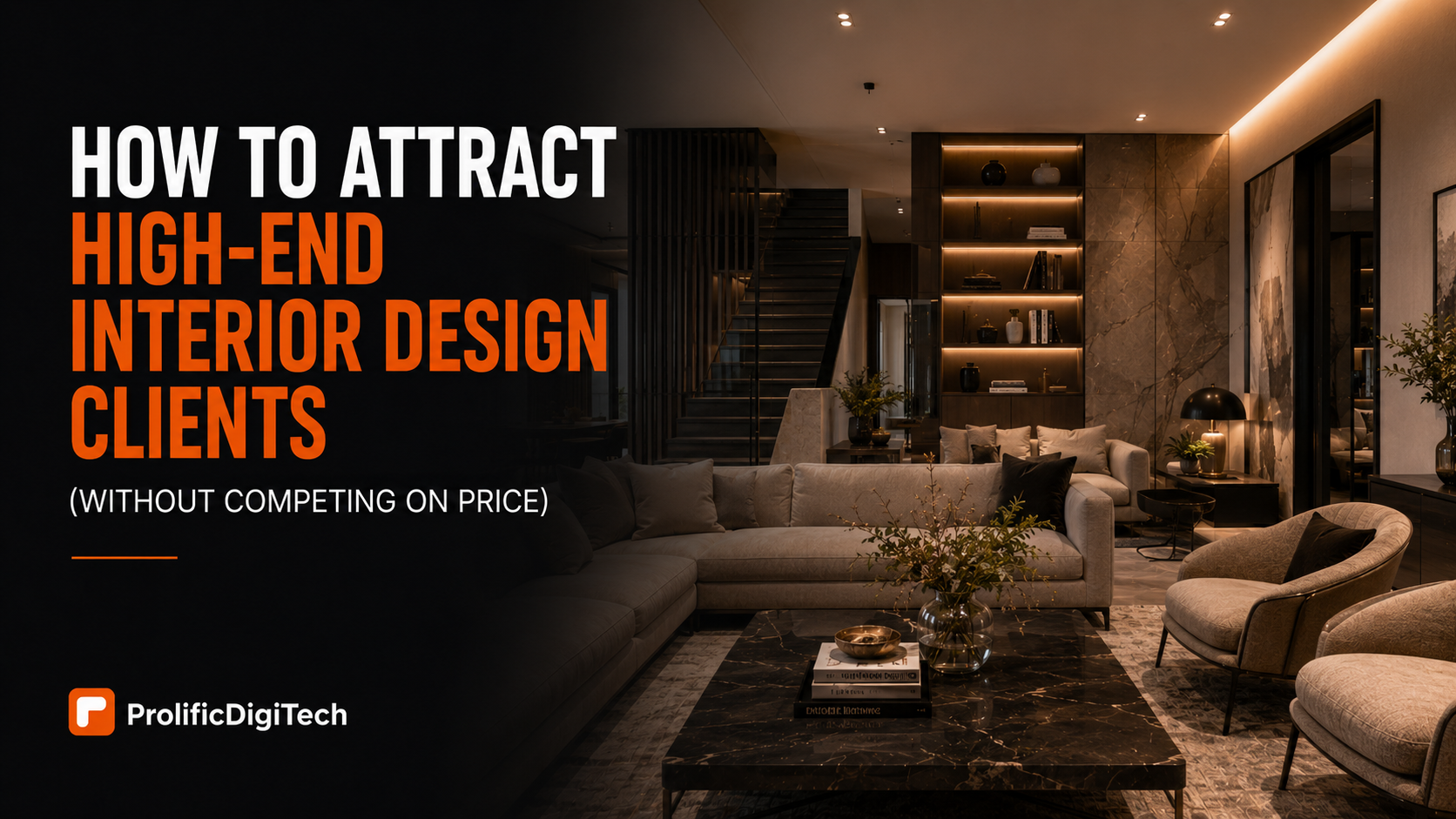
There is a version of interior design marketing that attracts every type of enquiry regardless of budget, and a version that consistently attracts the clients whose projects actually suit your studio. The difference is not the size of your ad spend — it is how specifically your marketing speaks to the type of work you want to do and the type of client who values it.
Why Most Studios End Up Competing on Price
When an interior design studio runs broad advertising — generic "interior designer near me" targeting, inspiration-led creative, or anything that appeals to the widest possible audience — it attracts a wide range of enquiries. Some of those enquiries will have a genuine brief and a realistic budget. Many will not. The studio then spends time in discovery calls trying to work out which is which, and the ones that don't convert quietly create the impression that marketing "doesn't work" for design businesses.
The actual problem is not the channel — it is the specificity of what the marketing says and who it is aimed at. Broad creative attracts broad interest. Creative that speaks specifically to a full-home interior renovation for a new build in a high-income suburb attracts a much more filtered audience, even before a single qualification call is made.
What High-End Clients Are Actually Searching For
Higher-budget interior design clients tend to search differently from general enquiries. They are often specific about project type — "full home interior design for new build," "interior designer for renovation project," "residential interior design studio" — rather than browsing broadly. They are also more likely to spend time on your website reviewing your portfolio, reading about your process, and checking whether your completed work matches the aesthetic and scale of what they have in mind before they ever make contact.
This means two things for your marketing: your Google Ads need to target project-specific search terms rather than generic "interior designer" queries, and your website and ad creative need to show completed projects at the scale and budget level you want to attract — not mood boards or inspiration imagery that appeals to anyone.
The Role of Meta Ads for Design-Forward Studios
Meta Ads (Facebook and Instagram) work differently for interior design than they do for most trades — because the audience is visually literate and spends a significant amount of time engaging with design content. This makes Meta a genuinely useful channel for design studios, but only if the creative does the qualification work that a discovery call would otherwise do.
Showing a completed full-home transformation with a clear project description — type of property, scope of work, approximate timeline — communicates who you work with and what the engagement looks like before a potential client ever clicks. Someone who sees that ad and thinks "this is what I want and I can afford it" is a fundamentally different enquiry from someone who responds to a generic inspiration image.
Your best creative asset is your completed work. A real room transformation tells the right client exactly who you are — before they ever speak to you.
Qualification Is Where the Work Gets Done
Even with well-targeted advertising and strong creative, some enquiries will arrive without a clear brief or a realistic budget. The step that separates a high-performing studio pipeline from a frustrating one is what happens in the first few minutes after an enquiry comes in. A real phone call within five minutes of every enquiry — not an email auto-response — confirms three things before a consultation is booked:
- Project type and scope — full home, single room, new build, renovation — so you know immediately whether it matches what your studio does.
- Timeline — actively planning and ready to engage versus "thinking about it in a couple of years."
- Budget range — not an exact figure, but whether they have a realistic understanding of professional design fees and project costs. This single question, asked clearly and without apology, filters out the majority of enquiries that would otherwise consume a designer's time in consultations that don't convert.
What Should You Budget for This?
For interior design studios in Australia and the USA, the goal is almost always quality over volume. Two or three well-qualified new client consultations per month — from enquiries that have been pre-filtered by project scope, timeline, and budget — will generate more revenue than ten unqualified ones. A realistic starting point for ad spend is AUD $1,500–2,500 per month in Australia or USD $1,200–2,000 per month in the US, separate from any management fee, with a strong emphasis on Meta creative featuring completed project photography.
Getting Started
If your studio is currently attracting enquiries that don't match your project type or budget threshold, the issue is almost always in the targeting and creative — not in the volume of advertising. See how we build client pipelines specifically for interior design studios — a free audit will show you where your current enquiry mix is leaking quality.
If your interior design studio operates in Miami, we have put together a city-specific breakdown covering Miami's unique client profile, search behaviour, and fee qualification. Read: Interior Design Marketing Miami FL.